Who Was Cloerinda Ford?
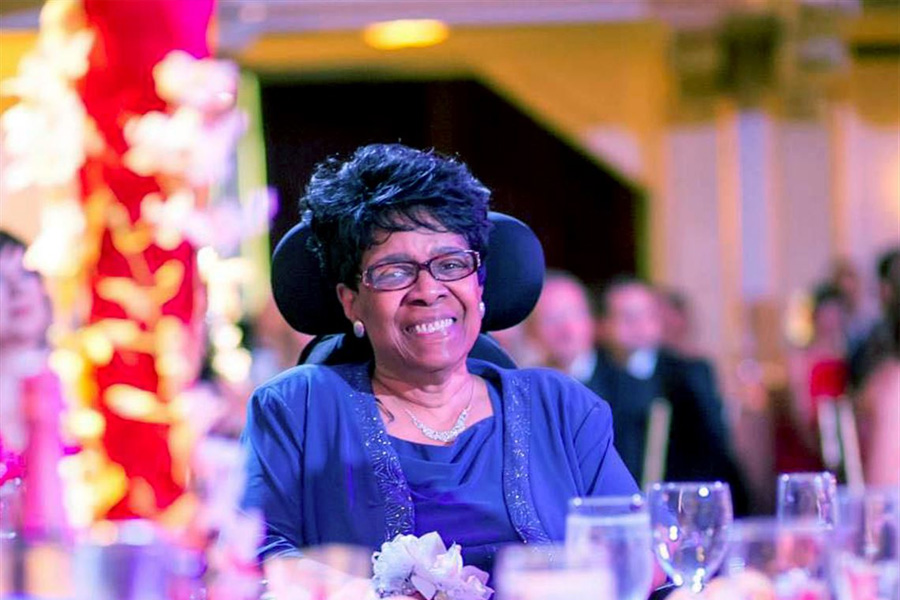
Clorinda Jean Johnson Porter-Ford, known as Cloerinda Ford, was born in Pittsburgh, Pennsylvania, on January 21, 1945. She was best known as the mother of Tony, Emmy, and Grammy-winning actor, singer, playwright, and Broadway performer Billy Porter. However, her narrative goes beyond her son’s. It depicts resilience, faith, familial commitment, and the will to live fully despite others’ limitations.
She lived in Lawrenceville, the Hill District, and East Liberty in Pittsburgh for most of her life. A neurological disease that affected her movement from birth, difficult relationships, and raising children in a religious family influenced her life. She had physical limits throughout her life, but they did not define her mind or character.
She died in Harlem, New York City, on February 29, 2024, at 79, where her daughter MaryMartha cared for her. After her death, her family, especially Billy, praised her as a mentor and an example of unconditional love.
Cloerinda’s resilience went beyond enduring suffering. It was also about living, raising her children, and maintaining her dignity in a harsh environment.
Early Life and Family Background
Cloerinda was born into a Black family with roots extending beyond Pennsylvania into the American South. Her parents were James Johnson and Martha Richardson Johnson. Through her mother’s family, she was connected to a broader history of African American migration, labor, and life in the Pittsburgh region.
Her maternal ancestry included Thomas H. Richardson, who was born in Virginia in 1889 and later settled in Pittsburgh. His death in 1923 following a police shooting became part of the family’s historical background. Accounts of the incident differed, reflecting wider concerns about police treatment of Black residents during that period.
Although this earlier history did not define Cloerinda’s personal identity, it placed her family within a larger story of Black American perseverance. The experiences of previous generations formed part of the backdrop against which she raised her own children.
Cloerinda grew up in Pittsburgh while living with a degenerative neurological condition that doctors were reportedly unable to identify precisely. According to Billy’s later recollections, she experienced an impaired gait and tremors, followed by progressive limitations in her mobility. She eventually relied on a walker and then a wheelchair.
Her physical condition also affected how other people treated her. As a child, she encountered misunderstandings about her abilities, including being grouped with children who had intellectual disabilities despite her sharp mind. Such experiences added social barriers to the practical difficulties of living with a lifelong disability.
Nevertheless, Cloerinda built a life around family, faith, and independence. She continued living independently in Pittsburgh for decades, eventually using a mobility scooter to move around the city. Her persistence became one of the qualities her children remembered most vividly.
Her Life With a Progressive Disability
Cloerinda’s neurological condition influenced nearly every stage of her life. The condition gradually reduced her mobility, and in her later years, her extremities became increasingly immobile. Even ordinary daily activities required adjustments as her physical abilities changed.
The exact medical diagnosis was never publicly established. It is therefore more accurate to describe her condition through its documented effects rather than assign it a specific disease.
For much of her adulthood, Cloerinda maintained a measure of independence that surprised those who knew the extent of her limitations. She lived alone in downtown Pittsburgh and continued getting out into the community with the help of a scooter. Around 2016, her needs increased enough to require a higher level of care, including a period in a nursing home.
Her determination to keep living actively became a recurring theme in family accounts. Even when her body made movement difficult, she remained mentally engaged and continued to express her preferences. Her life demonstrated that disability and personal agency are not mutually exclusive.
As her needs grew, family care became increasingly important. Her daughter MaryMartha played a central role in providing support, and Cloerinda eventually spent her later years in Harlem, where her daughter could be close to her.
Marriage to William Ellis Porter
Cloerinda’s first husband was William Ellis Porter, also known as William E. Porter. He was born in 1939 and died in 2006. The couple married around 1968, beginning a relationship that brought both a son and considerable personal difficulty.
Their son, William Ellis Porter II, was born on September 21, 1969. He would later become internationally known as Billy Porter.
The marriage was reportedly marked by physical and emotional abuse. Cloerinda eventually left the relationship when Billy was still very young, returning with him to live with her mother and her great-aunt Dorothy, affectionately known as Aunt Dot.
Leaving the marriage meant rebuilding her household while managing a disability that made many everyday responsibilities more complicated. The support of her extended family was important during this period.
Her decision to leave an abusive relationship became an early turning point in her family’s history. It also shaped the environment in which Billy grew up, surrounded by women whose support helped create a more stable home.
Second Marriage to Bernard Ford
In 1976, Cloerinda married Bernard Ford, commonly known as Bernie, who became Billy’s stepfather. The marriage was reportedly encouraged in part by concerns about providing Billy with a male influence during childhood.
However, the household later became associated with a deeply painful chapter in Billy’s life. He has publicly disclosed that Bernie sexually abused him between approximately the ages of seven and twelve.
Billy eventually told his mother about the abuse. His disclosure came after years of carrying the experience privately, and he has discussed the complicated family circumstances surrounding it in his memoir, Unprotected, published in 2021.
Cloerinda’s disability, the family’s religious environment, and the difficulties of her marriage formed part of the wider context of this period. The available accounts do not provide a complete picture of every decision she made or every conversation that took place within the household.
What is clear is that the family’s history involved serious pain alongside deep affection. Understanding Cloerinda’s life means acknowledging both realities rather than reducing her story to either her devotion as a mother or the hardships her family experienced.
Bernard Ford is now deceased. Details about his later life remain limited in public accounts.
Her Son Billy Porter and Their Close Bond
Billy Porter was Cloerinda’s oldest kid and informed many of her narrative. Born in Pittsburgh on September 21, 1969, he became a Broadway, television, and music star.
He won a Tony, Emmy, and Grammy for Kinky Boots, Pose, and the musical’s cast recording. His career shows years of training, artistic desire, and endurance in a profession that hasn’t always embraced outsiders.
Cloerinda encouraged his creativity and schooling. She apparently chose computer studies over performance. Teachers fostered his talents and his dedication to the arts, changing her worldview.
She boasted about supporting her son at a 2013 Pittsburgh Creative and Performing Arts festival. She said she had supported him throughout the difficult trip. She advised parents to praise their kids rather than denigrate them.
Their relationship strained when Billy came out as gay at sixteen. Cloerinda’s Pentecostal convictions and others’ opinions made acceptance difficult. She reportedly received hate calls that loving her LGBT son would be religiously condemned.
She came to understand her son more over time. Billy saw her as a true Christian who prioritized love and compassion over judgment.
He often attributed her resilience for making him determined. Her example inspired me to believe that physical challenges and social rejection don’t restrict a person’s potential.
Billy’s memoir Unprotected revealed their relationship’s warmth, struggles, and pain. The book depicted their relationship as a human one rather than a flawless parent and appreciative child.
Her Daughter MaryMartha E. Ford
Cloerinda’s younger child, MaryMartha E. Ford, also known as Mary Martha Ford and MaryMartha Ford-Dieng, played a major role in her mother’s later life.
MaryMartha grew up in western Pennsylvania and pursued her education before spending approximately a decade working in the entertainment industry. She later worked as a resident coordinator at a local college.
Her life also included significant medical challenges. In 2011, she underwent decompression brain surgery for a Chiari malformation, a condition involving structural abnormalities near the lower part of the brain. Her symptoms reportedly included muscle spasms, difficulty swallowing, and ringing in her ears. Billy traveled from New York to help care for her during her recovery.
The experience illustrated the closeness between the siblings. Their relationship has often been described as resembling a friendship as much as a conventional brother and sister bond.
MaryMartha became a caregiver for Cloerinda beginning in 1989, a commitment she described as an honor and privilege. As her mother’s mobility declined, that responsibility became increasingly demanding.
She was with Cloerinda in Harlem during her final days and joined Billy in announcing their mother’s death. Their shared tribute reflected a family determined to remember not only the difficulties Cloerinda endured but also the fullness of the life she insisted on living.
MaryMartha has also participated in projects and appearances connected to Billy’s career, including family-history programming and interviews about their experiences. Her role in preserving their mother’s memory is an important part of Cloerinda’s continuing family legacy.
Parents and Extended Family Connections
After her first marriage ended, Cloerinda relied on her mother, Martha Richardson Johnson. Returning to her mother’s house helped Cloerinda and Billy rebuild.
Her father, James Johnson, was another immediate family member, although little is known about his career and life.
Cloerinda was close to her great-aunt Dorothy Richardson Majors, known as Aunt Dot. Following the first marriage, Dorothy helped Cloerinda and Billy with domestic duties.
Pittsburgh-based Sharen Sims and Karen Coleman were her younger twin sisters. They survived Cloerinda and were her lifelong extended family.
The Richardson family history adds to Cloerinda’s story. Early in the 20th century, her maternal grandpa Thomas H. Richardson moved from Virginia to Pittsburgh. He worked in steel-mill packaging and plastering before his 1923 police shooting-related death.
Migration, work, prejudice, and kinship shaped these family links. Cloerinda saw relatives as more than names on a tree. Her network supported her through disability, childbirth, and big life changes.
Faith, Parenting, and Her Personal Values
Pentecostal Christianity was a defining feature of Cloerinda’s life. Her faith influenced how she raised her children, understood hardship, and interpreted family responsibilities.
Her religious beliefs also complicated her response when Billy came out. At first, she struggled to reconcile her son’s sexuality with the teachings and social expectations surrounding her. Community pressure made that process more difficult, particularly when other people challenged her right to love him without reservation.
Over time, the relationship evolved. Billy’s public descriptions of his mother emphasize that she eventually embraced a deeper understanding of love, one that did not depend on her son’s conformity to other people’s expectations.
Her parenting philosophy also included encouragement and education. Although she initially had reservations about a career in the arts, she ultimately supported Billy’s ambitions. Her public remarks about speaking positively to children reflected a belief that parental words could shape a young person’s confidence.
Cloerinda’s story therefore contains an important distinction between faith as a source of comfort and the limitations that can emerge when religious communities impose rigid expectations. Her relationship with Billy showed that personal beliefs can change through experience, love, and reflection.
Career, Financial Circumstances, and Achievements
Cloerinda had a low-profile career. She is remembered for her family, disabilities, and influence on her children, not her career.
No trustworthy public record exists of net worth, big business ownership, or substantial independent financial assets. Thus, estimating her wealth is guesswork.
Most of her life appears to have been modest. She lived in Pittsburgh neighborhoods and needed more care as she aged.
Traditional metrics of professional achievement don’t represent her life’s meaning. Her accomplishments included raising two children, promoting their education and dreams, keeping relationships during difficult times, and being independent for years despite major mobility issues.
Her impact on Billy Porter is notable. His artistic accomplishment earned him international fame, but he credits his mother with teaching him persistence and the value of living with purpose.
Thus, Cloerinda’s legacy is best understood through her family’s beliefs, not her wealth or professional honors.
Final Years and Death in 2024
In her later years, Cloerinda required increasing assistance as her neurological condition continued to affect her mobility. After living independently in Pittsburgh for much of her adulthood, she entered a period of more intensive care around 2016.
Her family continued celebrating her birthdays and sharing moments that reflected her determination to enjoy life. In January 2024, they marked her 79th birthday, a milestone that carried particular meaning given the physical challenges she had faced since childhood.
Cloerinda died on February 29, 2024, in Harlem, New York City. The leap-day date made her passing especially memorable, although her family focused on the life she had lived rather than the unusual calendar date.
Billy and MaryMartha jointly announced her death through social media tributes. Their messages described a woman who had faced a long and difficult struggle with grace and who had offered her children love, strength, and a lasting example of perseverance.
The family used the phrase “From Labor to Reward” to express their understanding of her passing through the language of faith. Their words reflected the importance of Christianity in Cloerinda’s life and the comfort they found in believing that her suffering had ended.
In June 2024, Billy dedicated his Isabelle Stevenson Tony Award to his mother. The recognition honored her influence and the lessons she had given him about unconditional love.
Although Cloerinda was not a public entertainer herself, her story became part of the wider narrative surrounding her son’s career. Through his recollections, her influence reached audiences who might otherwise never have known her name.
Cloerinda Ford’s Legacy in Pittsburgh and Beyond
Cloerinda identified with Pittsburgh. It was where she was born, reared her children, gained freedom, and saw Billy start his international performance career.
Celebrations of Billy’s achievements showed her link to the city’s arts scene. She was honored at a 2013 Creative and Performing Arts school event as one of his strongest supporters. Her words showed that she trusted her son’s objectives even when they didn’t match hers.
Her legacy lives on through her family history. The multigenerational story of James Johnson, Martha Richardson Johnson, and the Richardson family featured Southern roots and a long tie to Pittsburgh.
Perhaps most importantly, Cloerinda’s children’s stories continue her legacy. Billy’s depiction of her resiliency and MaryMartha’s years of caregiving illustrate a lady shaped by physical constraints but never defined by them.
Her narrative also shows that renowned people’s relatives have interesting lives. Billy dedicated an award to Cloerinda, although her relevance began before he became famous. Her life has choices, relationships, hardships, and love.
Frequently Asked Questions About Cloerinda Ford
Who was Cloerinda Ford?
Cloerinda Ford was the mother of actor and singer Billy Porter and his younger sister, MaryMartha Ford. Born in Pittsburgh on January 21, 1945, she was known within her family for her resilience, Pentecostal faith, and enduring support for her children. She died on February 29, 2024, at age 79.
Who were Cloerinda Ford’s parents?
Her parents were James Johnson and Martha Richardson Johnson. Through her maternal family, she was connected to Thomas H. Richardson, a Virginia-born ancestor who settled in Pittsburgh and died following a controversial police shooting in 1923.
Was Cloerinda Ford married?
Yes. She first married William Ellis Porter around 1968. They had one son, Billy Porter, and later separated. In 1976, she married Bernard “Bernie” Ford, who became Billy’s stepfather.
How many children did Cloerinda Ford have?
Cloerinda had two children: William Ellis “Billy” Porter II, born on September 21, 1969, and MaryMartha E. Ford, who is approximately a decade younger than her brother. Both children remained closely connected to their mother.
What medical condition did Cloerinda Ford have?
Cloerinda lived with a degenerative neurological condition that affected her mobility from birth. It caused an impaired gait, tremors, and progressive physical limitations. The exact diagnosis was not publicly identified, so a specific disease cannot be confirmed.
How did Cloerinda Ford support Billy Porter’s career?
She encouraged Billy’s artistic development while emphasizing education. Although she initially preferred that he consider a different career path, she eventually became one of his strongest supporters. Billy later credited her resilience and determination as important influences on his own life and work.
Did Cloerinda Ford accept Billy Porter as a gay man?
Her acceptance developed over time. Her Pentecostal upbringing and the opinions of people in her religious community initially complicated her response when Billy came out at sixteen. She eventually became a strong source of love and support, and Billy publicly celebrated her growth and unconditional affection.
Who cared for Cloerinda Ford in her later years?
Her daughter, MaryMartha Ford, played a central role in her care. As Cloerinda’s physical condition progressed, she needed more assistance than she had during her years of independent living in Pittsburgh. MaryMartha was with her in Harlem when she died.
What was Cloerinda Ford’s net worth?
Cloerinda Ford’s net worth was not publicly documented. There is no reliable evidence establishing a specific fortune or significant independent business holdings. Public accounts focus on her family life, disability, faith, and influence on her children.
When and where did Cloerinda Ford die?
Cloerinda Ford died on February 29, 2024, at the age of 79, in Harlem, New York City. Her children announced her death and remembered her for living fully despite lifelong physical challenges.
What is Cloerinda Ford remembered for?
She is remembered for her perseverance, devotion to her children, religious faith, and influence on Billy Porter’s life. Her story also includes her long struggle with a progressive disability, her efforts to maintain independence, and her eventual journey toward a more affirming relationship with her gay son.